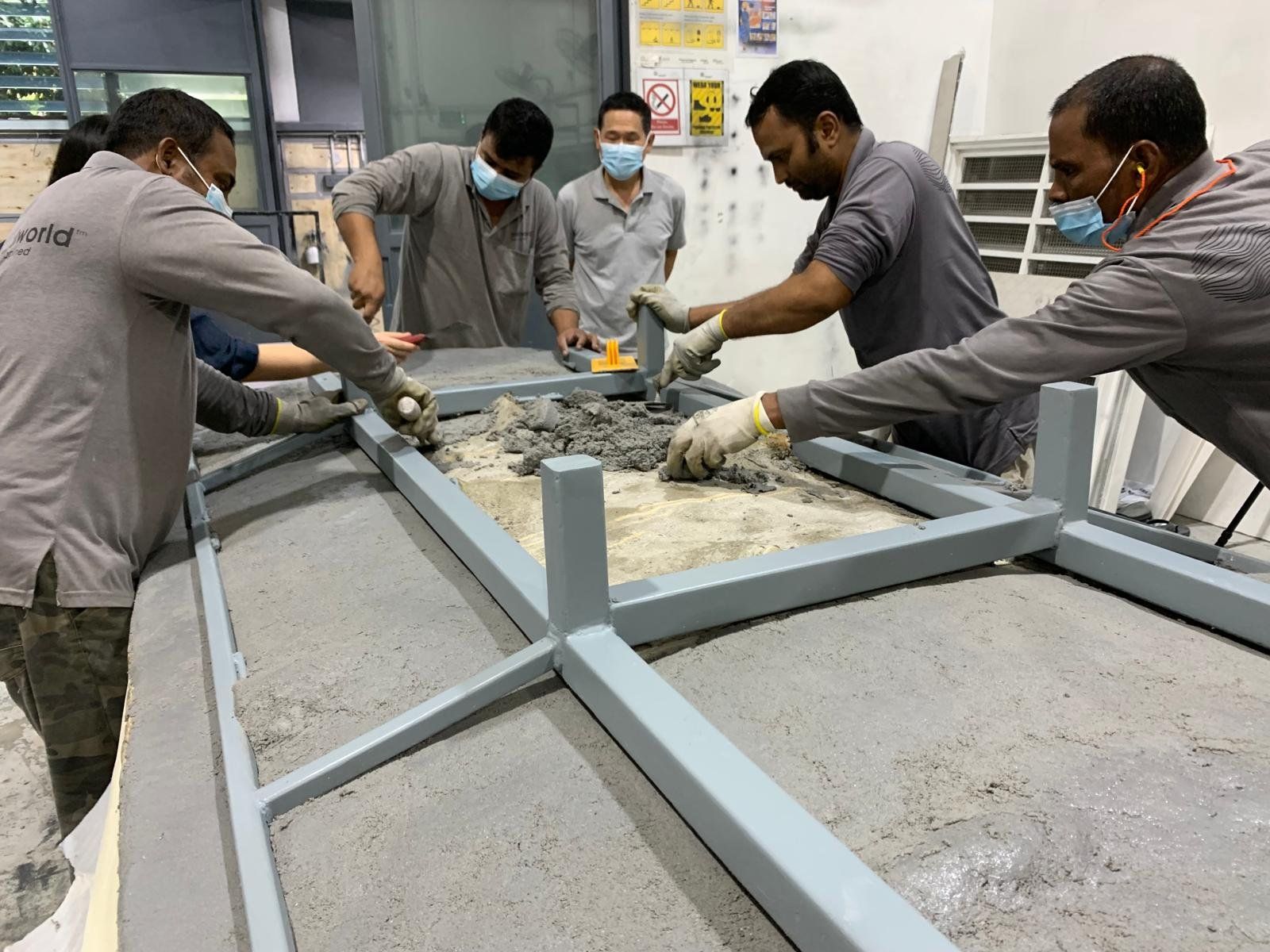
CONVENTIONAL PORTLAND CEMENT
Produced from clinker manufactured at very high temperatures.
Hardens through conventional cement hydration.

Different chemistry. New possibilities.
UrbaX uses nanoengineering to develop advanced inorganic binder systems, bringing materials science into practical applications in repair, protection and next-generation concrete.
Our technology platform translates advances in materials chemistry into durable, high-performance, lower-carbon solutions for demanding environments.
DIFFERENT CHEMISTRY
Once hardened, conventional Portland cement and advanced geopolymer materials may look similar, but their chemistry is fundamentally different.
Produced from clinker manufactured at very high temperatures.
Hardens through conventional cement hydration.
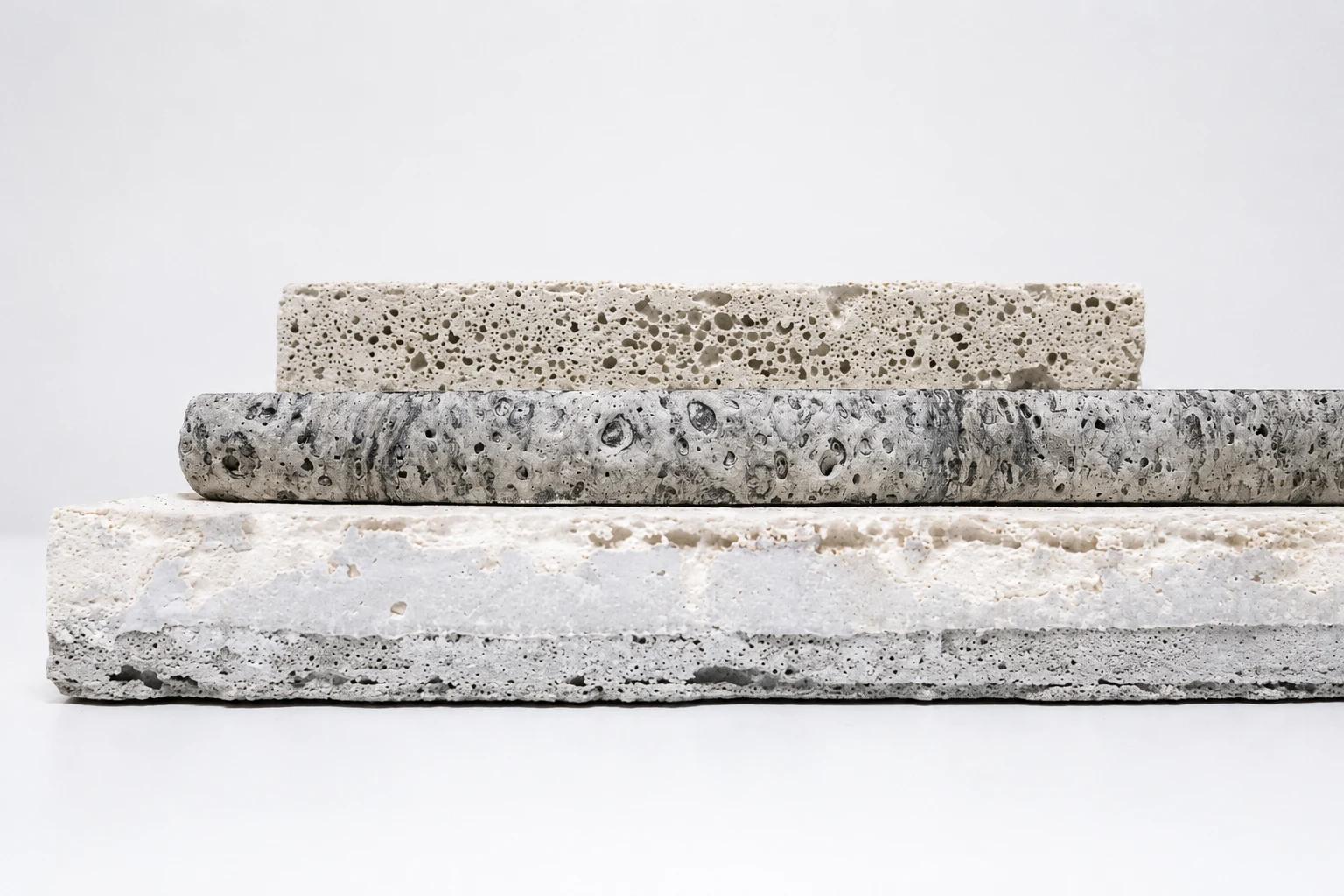
Uses advanced inorganic binder chemistry to create a tightly connected mineral network.
Geopolymer systems form a covalently connected Si–O–Al network, creating a fundamentally different material structure.
Performance begins with chemistry.
By reducing reliance on conventional cement with a high clinker content, we help reduce environmental impact and CO₂ emissions.
Advanced inorganic materials designed for durability in demanding environments.
Advanced inorganic materials designed for harsh chemical and environmental conditions, including salt exposure in coastal settings and underwater marine applications.
One materials platform supporting repair, protection, concrete and specialist applications.
UrbaX adapts its core technology to different materials, applications and environments.
FROM UNDERUSED MATERIALS TO HIGH-PERFORMANCE SYSTEMS.
Overlooked and underused materials can become valuable resources.
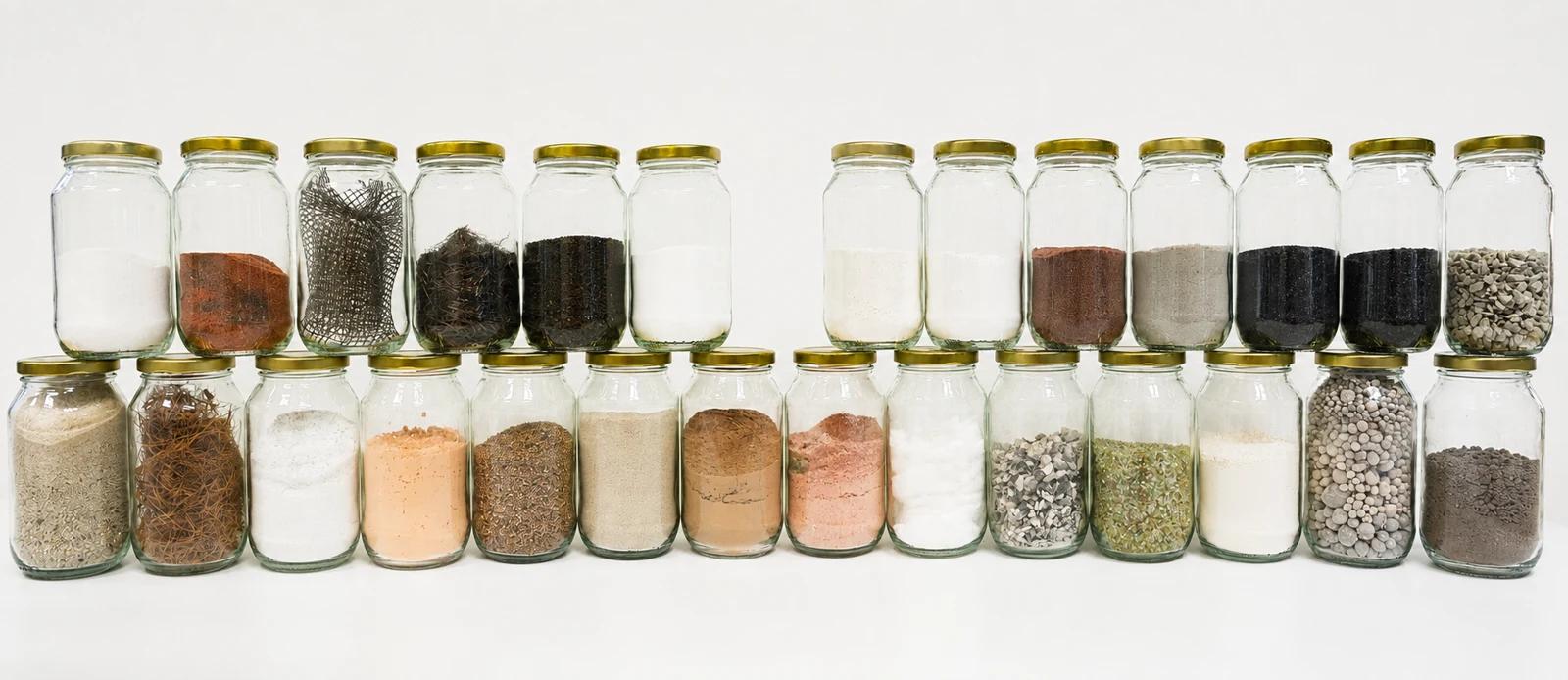
UrbaX combines nanoengineering, formulation expertise and advanced inorganic binder chemistry to transform selected residual materials, by-products and alternative raw materials into high-performance materials. Our research and testing include desert sand, coconut fibre and marine plastic waste as we explore new uses for underused resources and waste materials.
Unlocking new possibilities in overlooked materials.
Advanced inorganic binder chemistry and nanoengineering.
Material systems engineered for specific repair, protection and concrete applications.
Laboratory testing, proof-of-concept trials and field studies.
Solutions developed for buildings and infrastructure, as well as industrial and marine environments.